


Toronto Harm Reduction Workers Union & Toronto IWW Win Termination Pay For Fired Organizer
Submitted on Tue, 02/10/2015 - 8:56pm
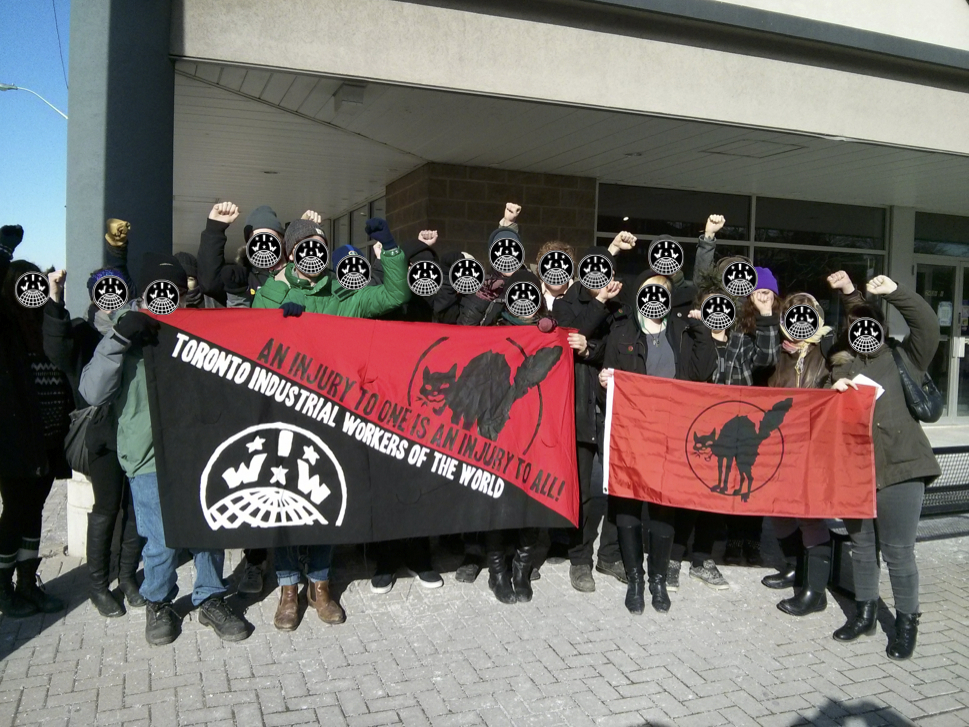 On January 7, 2015, two days before the end of her 6 month probationary period, THRWU member S. was terminated from her job as a Senior Harm Reduction Worker at Syme Woolner Neighbourhood and Family Centre.
S. was terminated immediately and without cause, which is reprehensible but legal in Ontario within a probationary period. During her 6 months-less-two-days at Syme Woolner, S. had advocated for better treatment of workers and against discrimination and disrespect of workers and service users. She was the third person to occupy her position in less than a year.
Upon her termination, Syme Woolner Management gave S. an offer of severance in exchange for her silence. It erroneously informed her that “since you are still in your probationary period, you are not entitled to any notice of dismissal or pay in lieu thereof.” Syme Woolner offered two weeks of pay to S. if she contractually agreed to refrain from “directly or indirectly, either orally or in writing, make any comments of a negative or disparaging nature whatsoever about the Company, its employees, officers, directors, or associated companies.” She did not want to sign the document.
Fortunately, S. is a member of the Toronto Harm Reduction Workers Union. With coordination with the Toronto IWW’s Solidarity Committee, THRWU moved forward with a plan to get S. what she was owed. Especially concerning to the union was the idea that S. would have to refrain from discussing conditions at Syme Woolner.
On Tuesday January 20, 2015, S. and 25 members of the Solidarity Committee of the Toronto IWW, Toronto Harm Reduction Workers Union, and supporters, walked in to Syme Woolner and read a letter to Executive Director Mark Neysmith demanding that S. be paid the outstanding money she was owed for hours worked, as well as two weeks termination pay. The letter stipulated that Syme Woolner had until the end of the week to comply.
S. and supporters filled the lobby of the Centre, but courteously and politely made space for the service users and workers going about their business, and explained that they were just there to support S. in delivering a grievance. After the crowd parted to allow a service user access to the centre, she remained in the lobby and asked “I should join in too?”
After about 5 minutes, Syme Woolner manager Mark Neysmith appeared. Mark told the crowd that this was “a private matter.” However it was clear to all that this was no longer the case. Mark was given a copy of the letter and at first refused to allow S. to read it aloud. She began reading anyway. When she had finished, there was spontaneous applause, and S. and her supporters made their exit.
Two days later, on Thursday, January 22, S. was paid for her outstanding hours and one week’s termination pay.
The day after S. received her pay, she received a letter from Syme Woolner’s lawyers, claiming “Our client is extremely concerned by the actions of you and your friends […] Needless to say, Syme Woolner will take legal action if you engage in any activity, either directly or indirectly, that is defamatory of Syme Woolner or otherwise affects the Organization, its reputation, or its operations negatively.”
Despite this, the lawyers reiterated the offer to buy S.’s silence saying, “Despite the manner in which you have conducted yourself since dismissal, and our client’s concerns regarding your conduct when you attended at their offices, the offer set out in the dismissal letter remains open for acceptance. If you would like to receive the additional week of pay, please execute the enclosed Release and return it to my attention.” S. has no intention of signing.
Harm reduction workers make harm reduction work. The days of harm reduction workers getting pushed around by management with no recourse are over in Toronto. The Toronto Harm Reduction Workers Union will continue organizing to win better working conditions and worker’s power, both of which are essential to achieving harm reduction services that work.