Submitted on Sun, 02/05/2006 - 3:54pm
By John Kalwaic - Anarcho-Syndicalist Review #42-3, Winter 2006
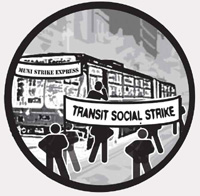 The latest attack on workers' rights around the world is now hitting the people who make public transportation possible in many of the world's metro areas. Tehran and New York City are both in states that are bitterly opposed to one another but share the similarity of not allowing public transportation workers to organize and fight back against the attacks by local transportation companies. In both Tehran and New York City, local or national governments have deliberately tried to hamper the efforts of striking workers who want their unions to defend workers' rights.
Submitted on Fri, 02/03/2006 - 3:36am
By New York city MTA Train Operator Harry Harrington - Industrial Worker, February 2006
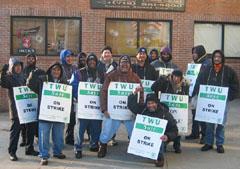 The drama of the New York City transit strike began three years ago during the last contract struggle. The president of the subway and bus workers union local 100 of the Transport Workers Union went down to the deadline with threats of a strike but no preparation until, the day after the contract deadline, he accepted what members considered a terrible deal. It called for no raises in the first year of the contract, with givebacks in health benefits, discipline and job security – the future of hundreds of bus drivers and support personnel – by accepting little input in the MTA’s bus consolidation plans.
Submitted on Fri, 02/03/2006 - 3:27am
By Richard Myers - Industrial Worker, February 2006
One miner is injured in an explosion and will soon die. Twelve miners walk through the mine without necessary information or direction, their lives also in mortal danger.
The communication system has failed and ventilation controls were damaged during an explosion, allowing the buildup of dangerous gases. The emergency response is deficient, it fails to protect and evacuate miners at risk.
But this was not the Sago Mine in West Virginia. This was Brookwood, in Alabama, September of 2001. There had been a methane explosion, injuring four miners. Three were carried to safety. A second, larger explosion took the lives of the miner immobilized in the first blast, and twelve would-be rescuers. It was one disaster in an endless thread of disasters, a continuing calamity across the ages.
Submitted on Fri, 02/03/2006 - 2:55am
Industrial Worker - February 2006
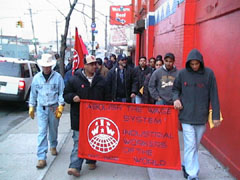 Deep in the gritty, industrial district of North Brooklyn/Queens, 15 workers of EZ Supply started the new year right by marching to their workplace and demanding that their highly abusive boss sign a petition recognizing the IWW as their union.
Little over a month earlier they had come to the workers’ night at Make The Road by Walking, and told of working long hours without being paid overtime, which ultimately amounted to being paid less than minimum wage. Sometimes the trucks would finally be loaded to the top at 3 p.m., and the workers would be told that all 25 stops in Manhattan had to be made. And they did something rarely heard of: they collectively forced their boss to rehire a fired worker, who had been fired because he hadn’t made all the stops that day.
Submitted on Fri, 02/03/2006 - 2:54am
By Tomer Malchi - Industrial Worker, February 2006
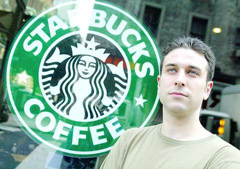 On Friday Nov. 18, Starbucks workers at Union Square publicly declared their membership in the Starbucks Workers Union. Throughout the weekend workers showed their strength by refusing to take off union pins in the face of management attempting to enforce a no-pin policy. Our key demands were for guaranteed hours, a group meeting with management, and an end to anti-union discrimination.
District manager Kim Vetrano informed us three days after we went public that we could not wear our pins; although pins have been worn in the past, the policy was suddenly being enforced. Vetrano also insisted there would be no group meeting. We could have one-on-one meetings with managers, but not as a group.


